

Hi all,
in the "Appear X Platform" connector, the "Output Redundancy Settings" and "Output Redundant Sources" tables contain similar parameters. I need to be able to retrieve this data as a single table within a dashboard. I have already tested a query using a JOIN, but it did not work. What options do I have to retrieve the data as a single table in a dashboard?
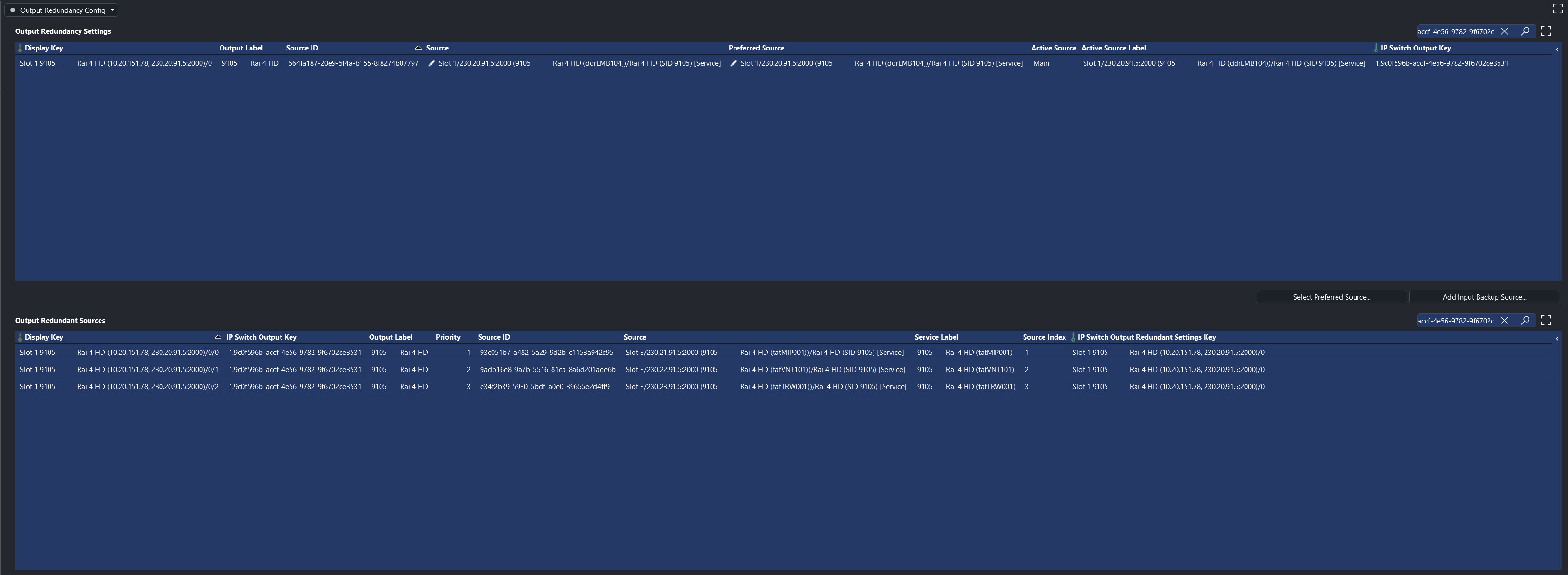
Desired result for the dashboard.

Thanks and best regards
Christoph
Hi Carlos,
thanks for the reply, but your solution doesn't work for me.
I’ve already tried something similar, but even with that approach, I only get the result from one of the tables.
This is the result.
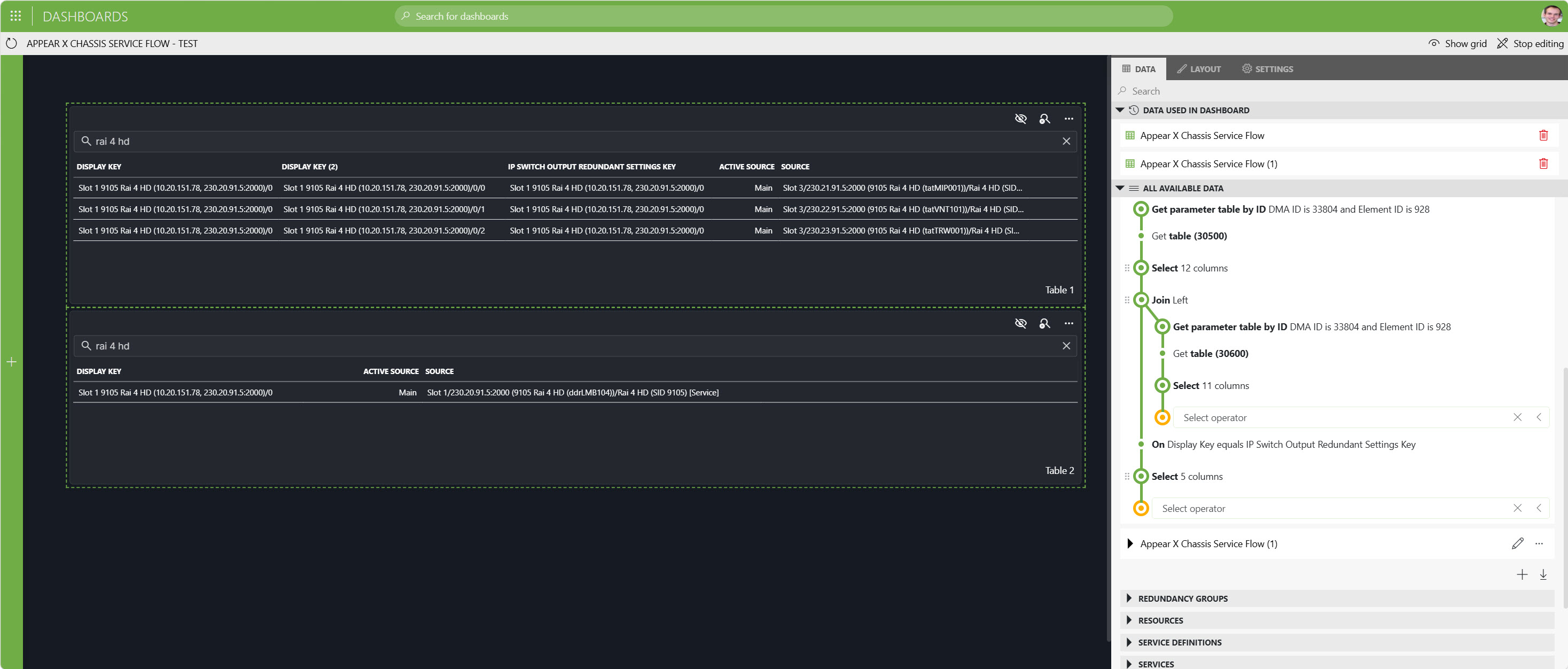
This is the other table.
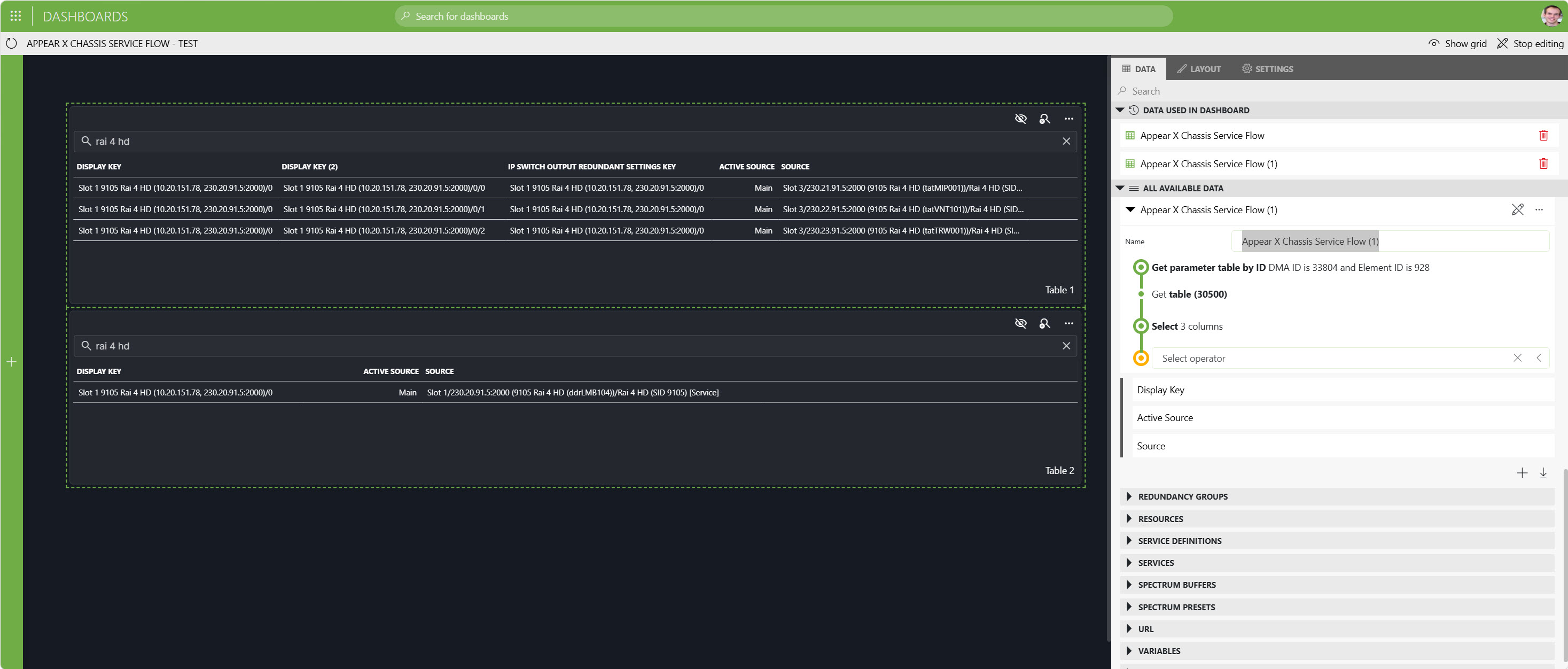
But the result I want is to have, a combined new table with both data, like this:

Thanks and best regards
Christoph

Hi Christoph,
Indeed we need to use a JOIN to accomplish this. In this case, I used a LEFT JOIN, with the two columns I selected being the Display Key from the first table and the IP Switch Output Redundant Settings Key column from the second table, which is the link key between those tables. After doing that, I just added a small filter to avoid showing rows that don't match, i.e., rows available in the first table but not in the second one, and I ended up with a result like this:
This is the query I built, hope it helps
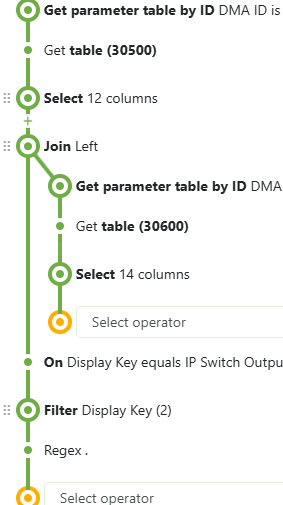
Let me know if this works for you!

This approach requires a large number of joins because I need data from very different tables, and I have to read the inputs on the Appear X multiple times to query them all. It works in principle, but when I finally put everything together, it stops retrieving data, even after 30 minutes, there is no data.
It stays like that

I removed the part up to the point where it worked.

Then I tried another part, and it was working as well.

Both parts worked independently, but not together.
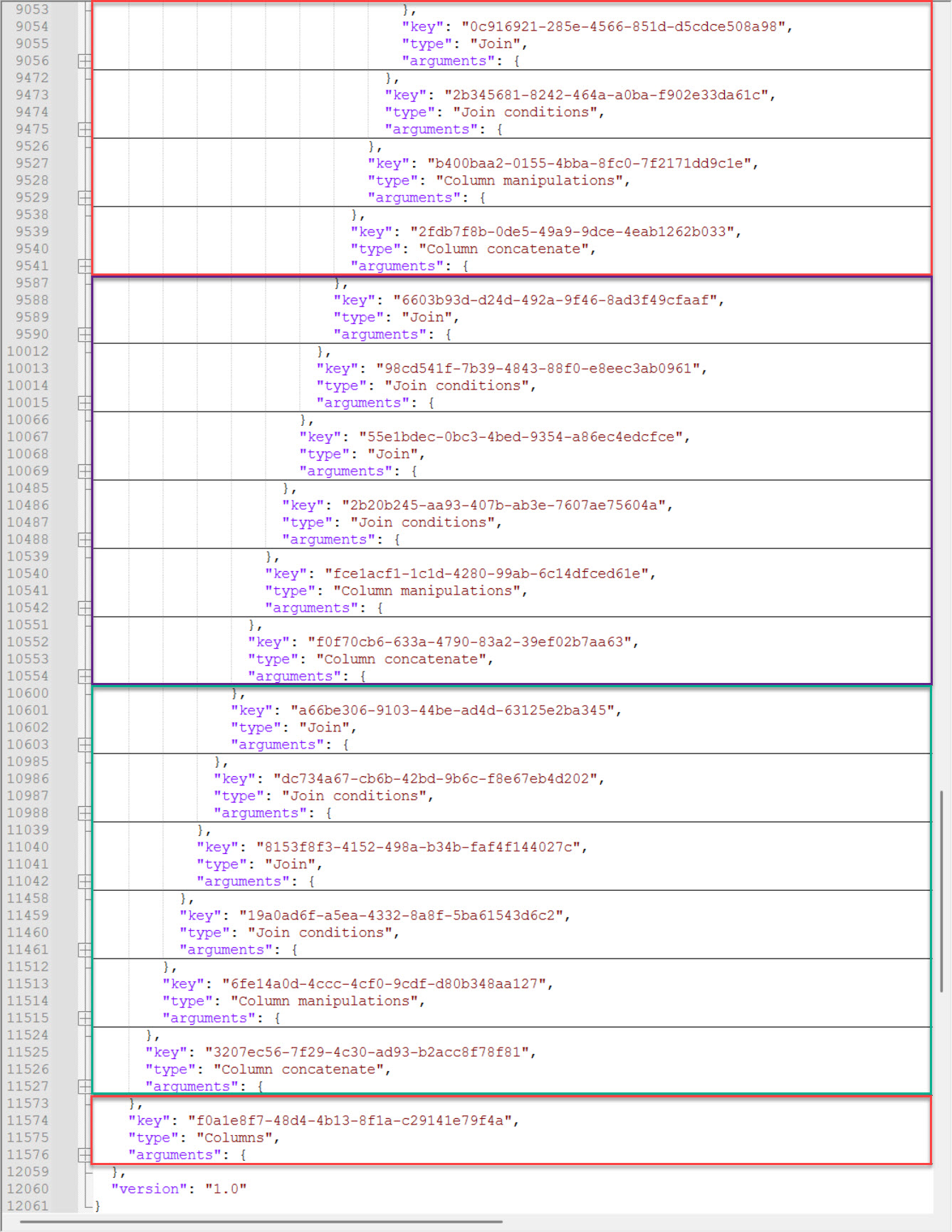
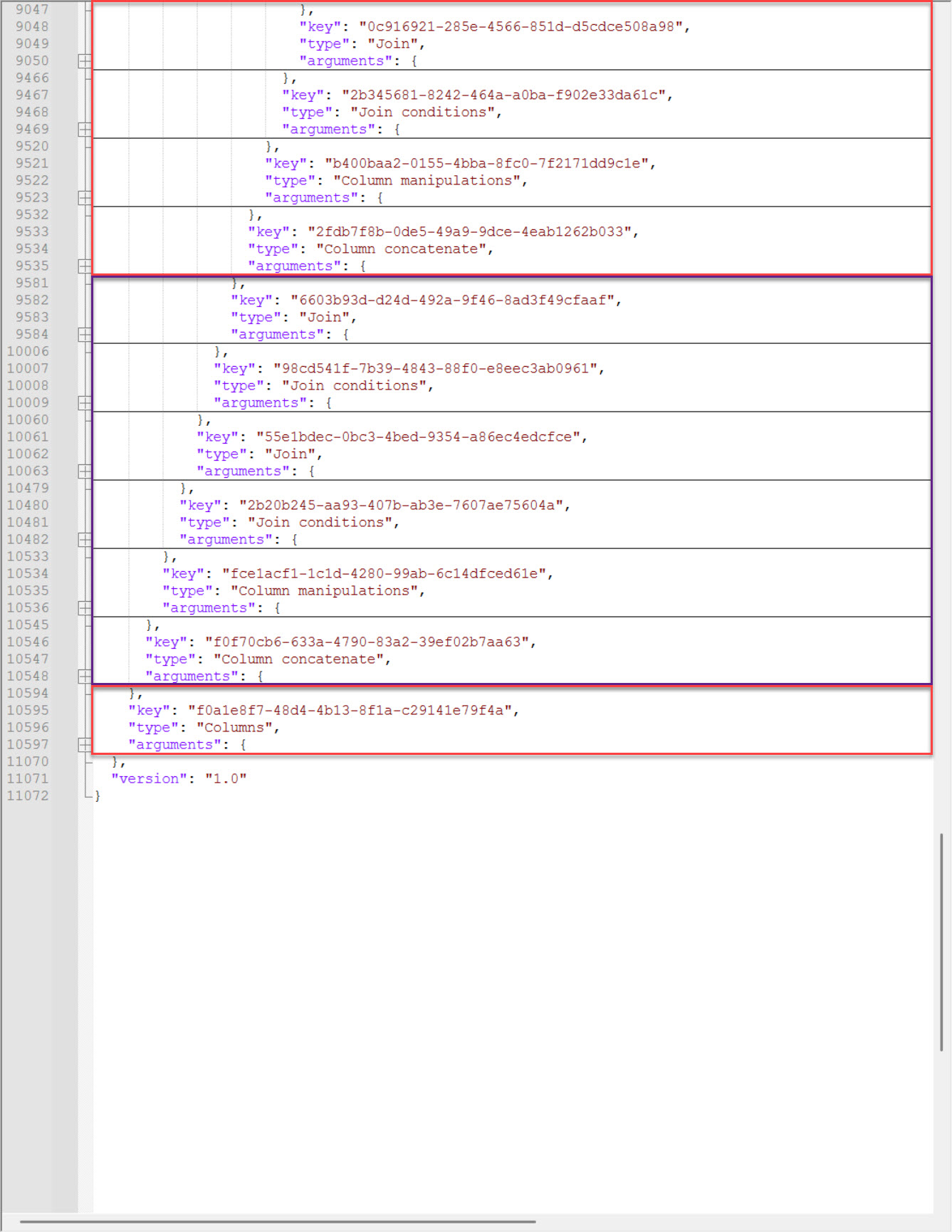
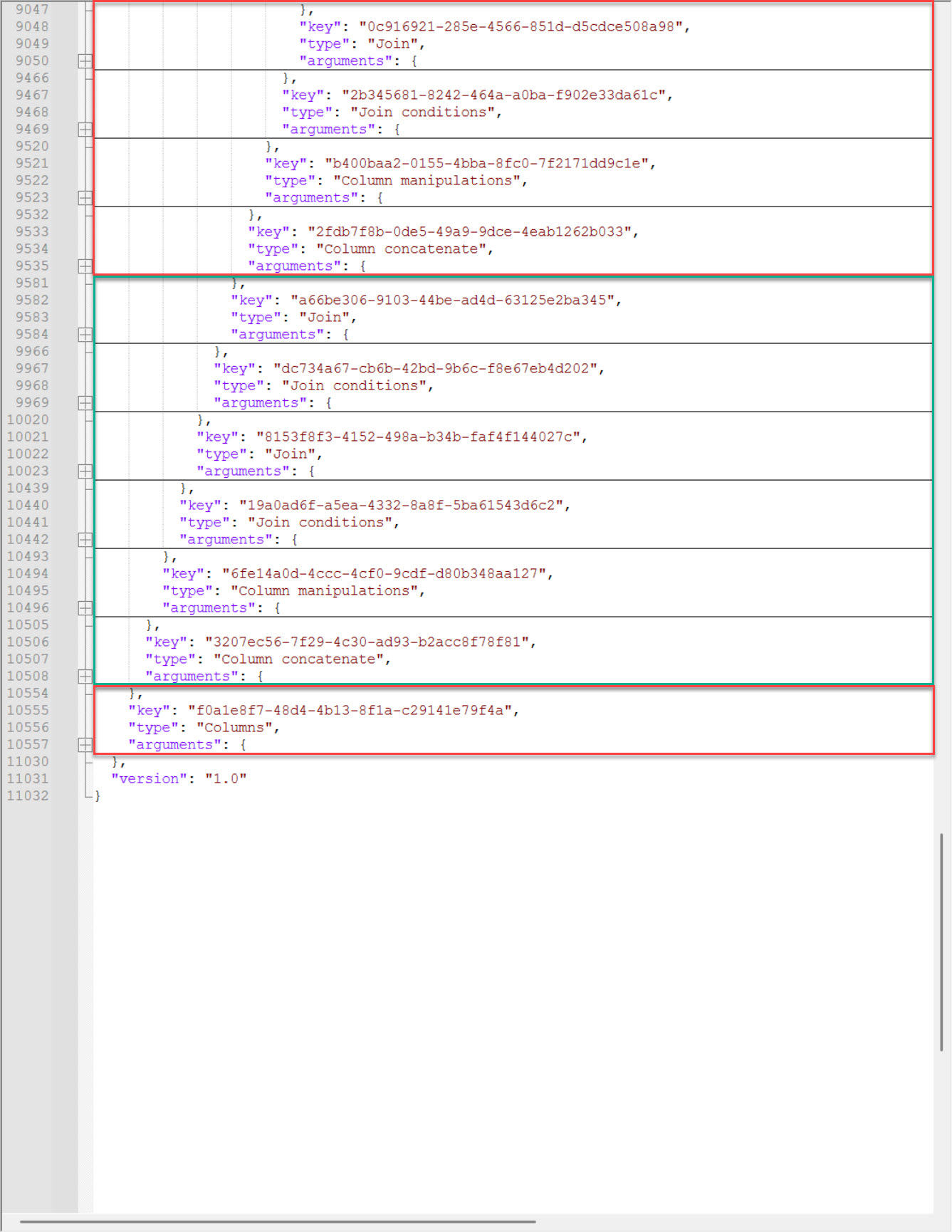
Here is the JSON code for the various queries. Red is used for all queries, violet only for the first query, and green only for the second query.
Non funktional querie
Functional first querie.
Functional second querie.
Thanks and best regards
Christoph
I originally wanted a different representation, but your approach worked. I have another problem now because I have to perform so many joins, I'll explain that in a separate reply. Thanks