
solution Use Case
Automated license optimization for Grass Valley AMPP

A Dynamic Media Facility (DMF) relies on fully software-defined media infrastructure, where resources are instantiated, configured, and released dynamically per production.
This requires a robust orchestration layer that manages the entire lifecycle of media resources:
- Planning: Identify and reserve all required resources upfront based on scheduled productions
- Provisioning: Automatically deploy, start, and configure resources before an event
- Connectivity: Establish signal routing between all components
- Monitoring: Continuously track performance and health across the full lifecycle
- Decommissioning: Tear down resources after the event and release capacity
To ensure reliability and scalability, orchestration must also account for underlying dependencies, including compute capacity, network bandwidth, and software licensing constraints.
For a deeper industry perspective, refer to the SMPTE paper “Dynamic Media Facility – Resource Planning and Orchestration: Possibilities Today and Challenges Ahead” (January 2026).
From flexibility to cost efficiency
While DMFs are primarily driven by the need for operational flexibility, supporting different productions at different times, they also introduce a critical requirement: cost optimization.
This is where FinOps becomes essential.
FinOps treats infrastructure and software consumption as a real-time, controllable operational metric, rather than a static monthly expense. In dynamic environments, this enables continuous optimization of resource usage and associated costs.
Use case: Optimizing GV AMPP with DataMiner
The Grass Valley AMPP platform is a strong example of software-defined production, where licensing and resource usage directly impact operational cost.
With DataMiner:
- Production lifecycle orchestration
DataMiner enables full automation of production workflows:
- Automatically start and stop AMPP workloads
- Configure services and interconnections
- Align all operations with the production schedule
See also: Grass Valley AMPP – Production Scheduling & Orchestration
2. Dynamic FinOps optimization
Building on orchestration, DataMiner introduces real-time FinOps intelligence:
- Supports GV AMPP’s PAYG (Pay-As-You-Go) and subscription-based licensing models
- Continuously analyzes scheduled productions and required workloads
- Calculates the optimal commercial model per month
- Provides detailed cost comparisons and recommendations
- Enables automated subscription activation or termination
Business impact
By combining orchestration with FinOps, DataMiner enables media organizations to:
- Maximize resource utilization across productions
- Eliminate unnecessary licensing costs
- Adapt commercial models dynamically to actual demand
- Achieve cost savings of several thousands of dollars per month
USE CASE DETAILS
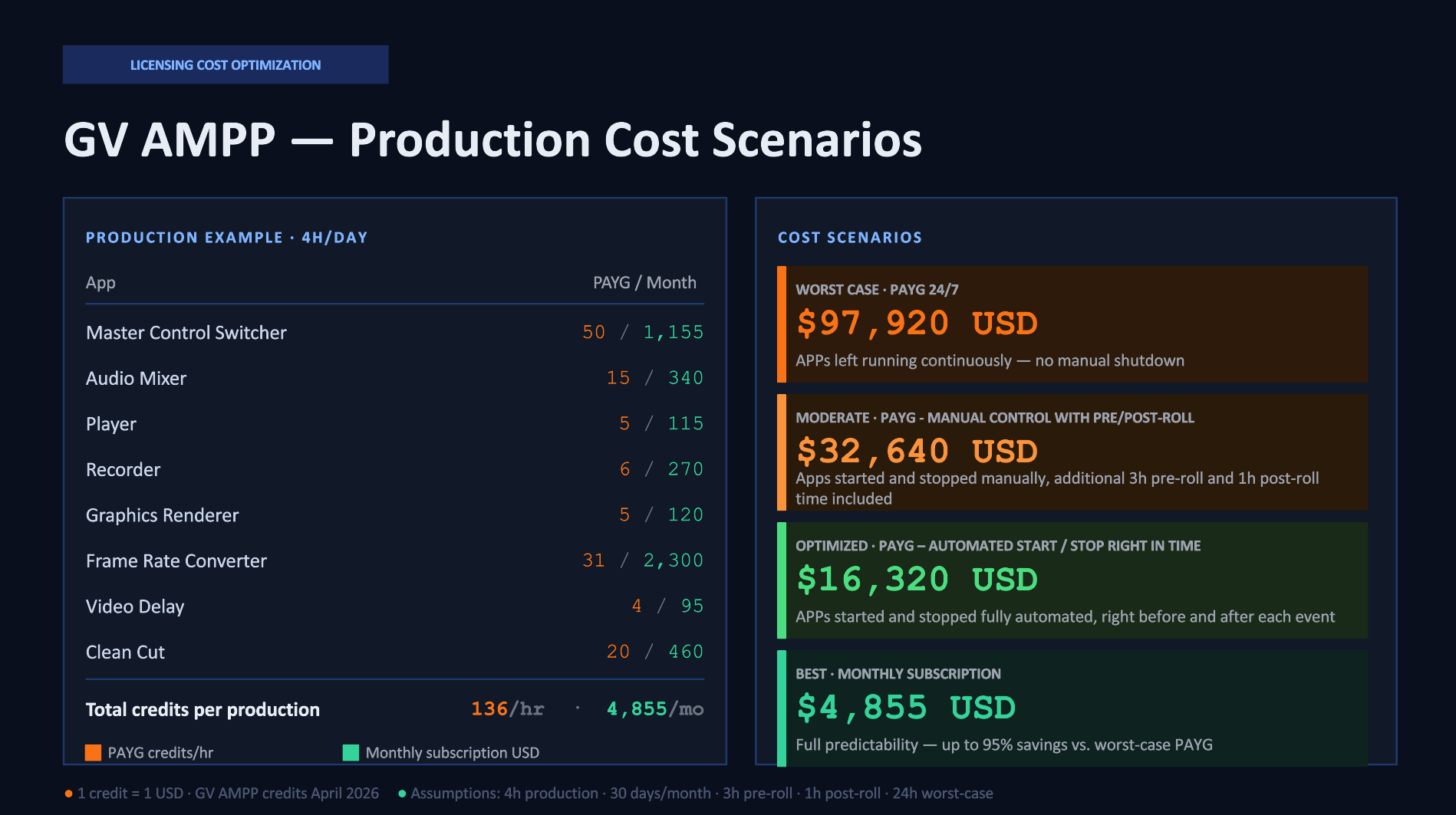 Cost comparison example: PAYG vs. subscription
Let's start with a simple cost exercise based on the Grass Valley AMPP platform.
In this production scenario, 8 different AMPP workloads are required. This results in:
• 136 tokens per hour when using the PAYG model
• ~4,855 tokens/month when running all workloads under a subscription
Now assume this is a daily production that requires these resources for 4 hours per day.
If operators:
• Leave workloads running continuously (which is common, as PAYG is the default), or
• Forget to stop them after production
... the total cost can quickly escalate to nearly $100,000 per month.
Even with more disciplined operations, starting and stopping workloads manually, including realistic pre-roll and post-roll time, the PAYG model remains highly inefficient for this use case.
In this scenario, the optimal approach is to run all workloads under a monthly subscription, resulting in a total cost of less than $5,000 per month.
👉 Potential savings: ~ $95,000 per month, purely by selecting the correct commercial model.
In real-world environments, the situation is typically more nuanced:
• Some workloads are only needed for a few hours per month → best suited for PAYG
• Others are used frequently or predictably → better suited for subscription
This highlights the need for dynamic cost optimization, where the optimal licensing model is continuously determined based on actual usage patterns.
To optimize costs, planning productions ahead of time is essential.
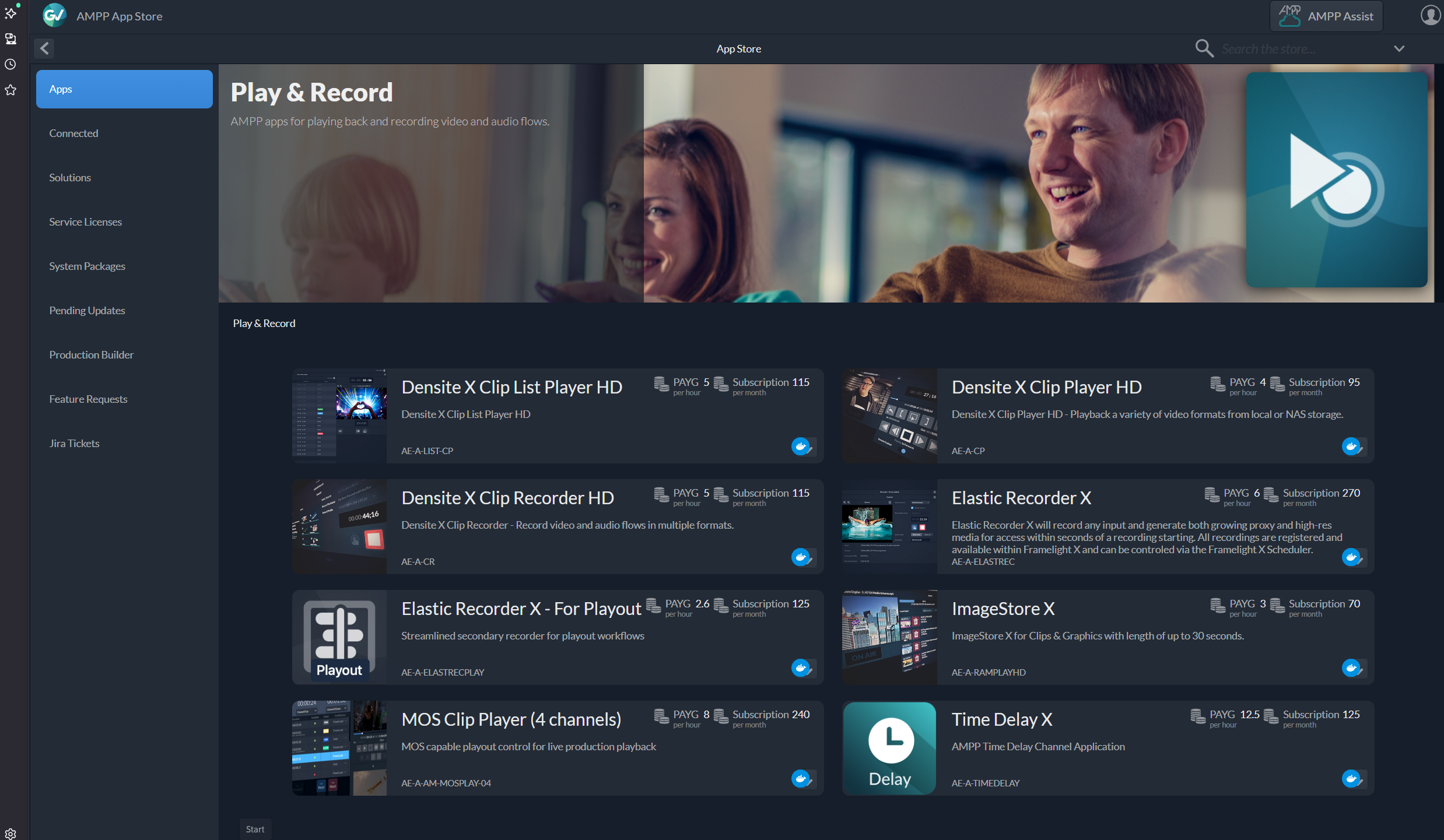 The GV AMPP catalog lists the token costs for each workload under both PAYG and subscription models.
This info allows orchestration platforms like DataMiner to analyze costs upfront and determine the most efficient licensing strategy for each production.
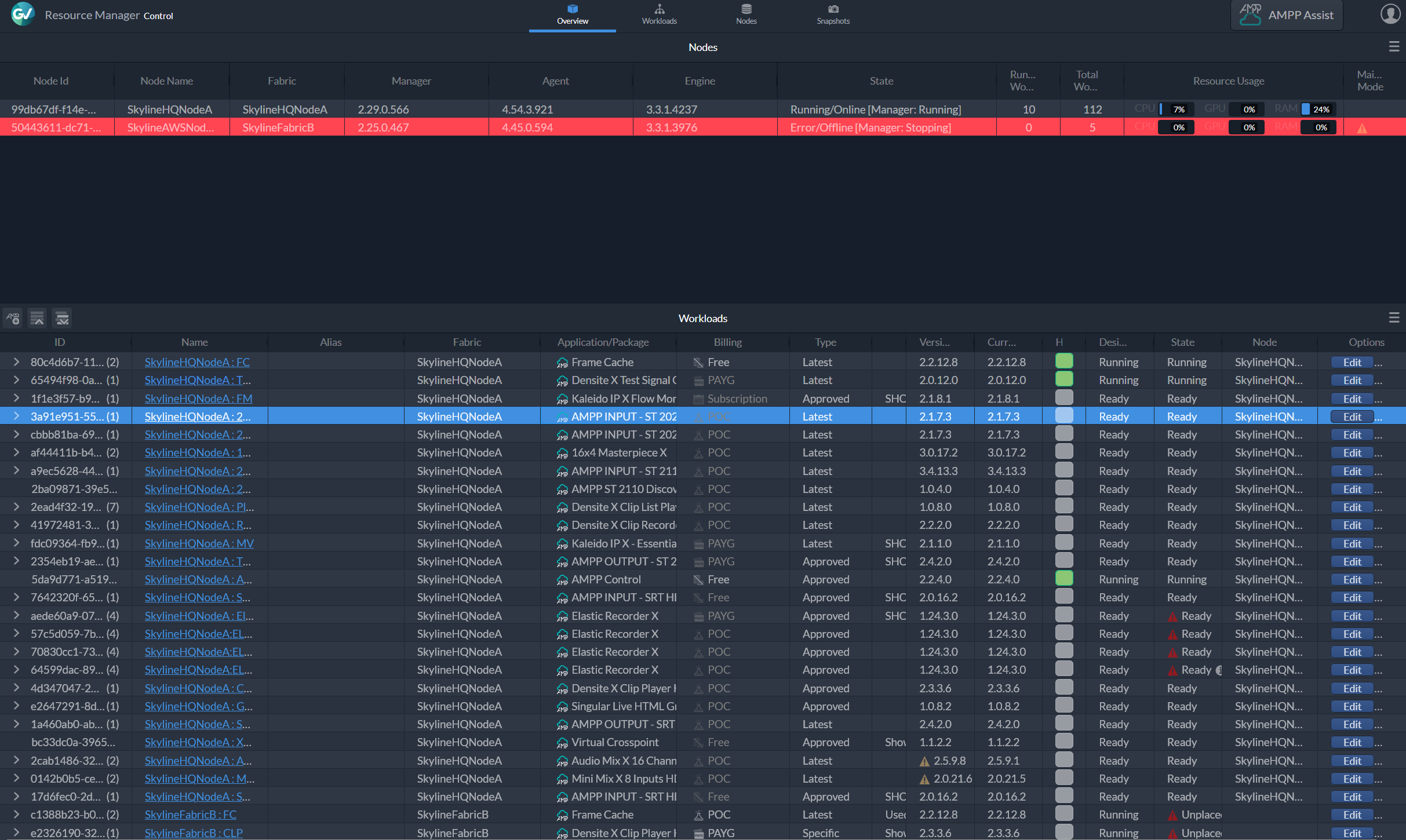 GV AMPP workloads: PAYG vs. subscription
This screenshot shows the GV AMPP user interface with workloads under two models:
• PAYG: pay-as-you-go workloads
• Subscription: workloads included in a monthly plan
It illustrates how workloads can coexist under different licensing models, highlighting the complexity of manually managing costs without orchestration.
 Managing GV AMPP subscriptions manually
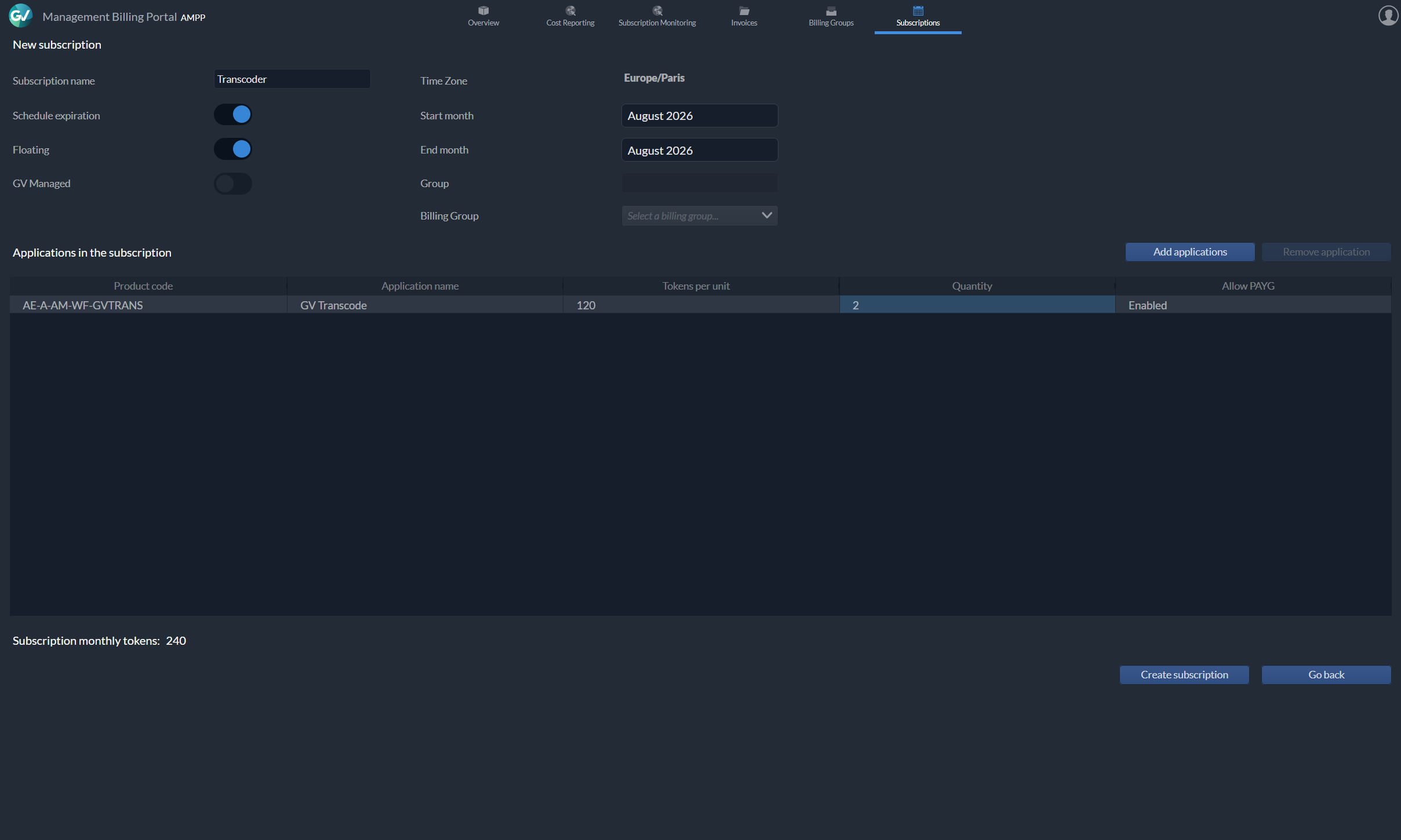
This screenshot illustrates how subscriptions are managed manually in GV AMPP:
• Start date: Subscriptions begin at the start of the month and can also have an end date
• Quantity: You must specify the number of concurrent workloads of the same type
• Behavior: The subscription covers the first workload started; any additional simultaneous workloads of the same type run in PAYG if you allow in this configuration
This highlights the complexity of manual subscription management and why automated orchestration with DataMiner can optimize both usage and costs.
 Scheduling productions
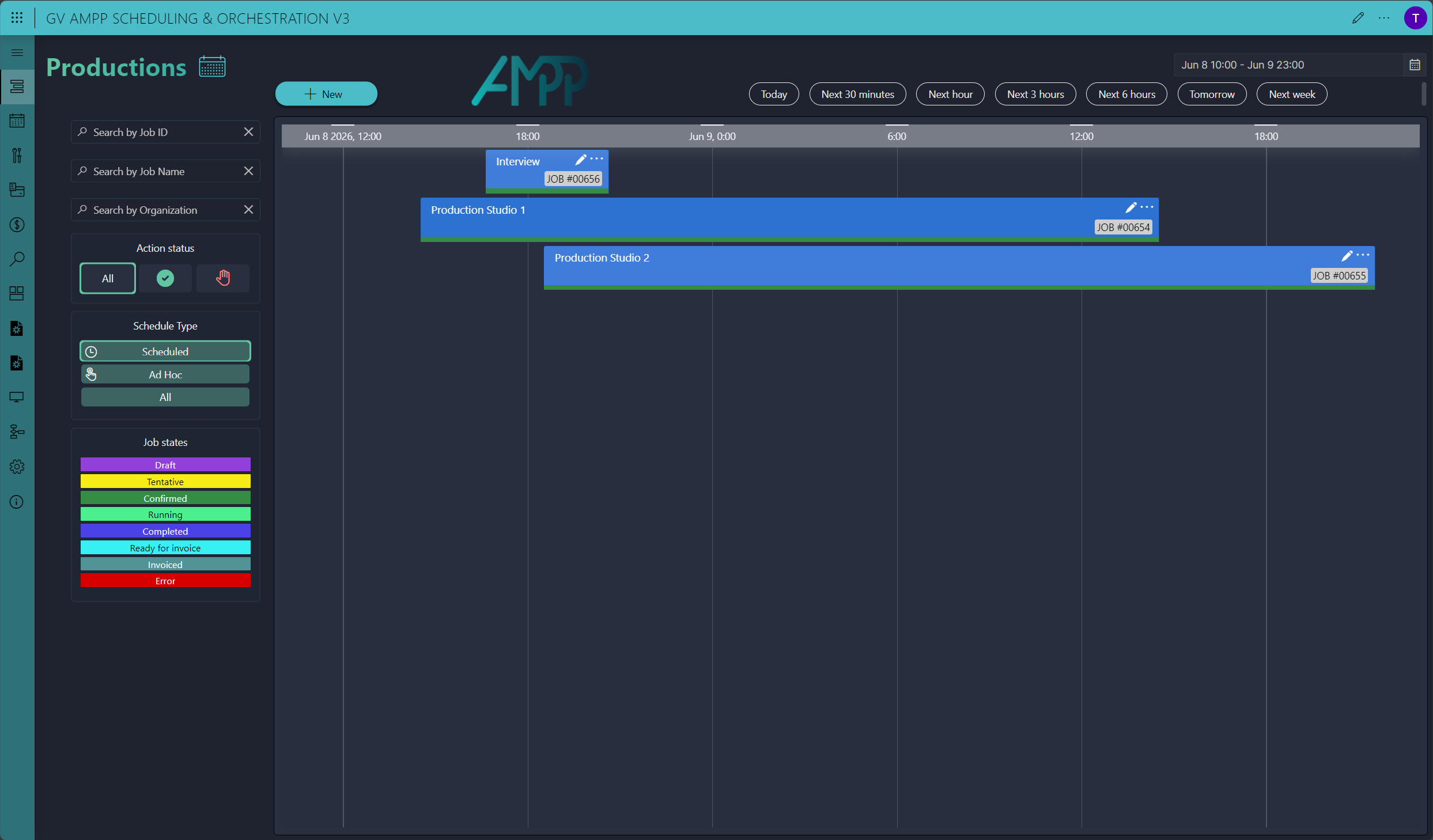
With DataMiner, the first step is to schedule all upcoming productions for the month.
This schedule forms the foundation for automated orchestration and cost optimization, ensuring that all required GV AMPP workloads are started, configured, and routed exactly when needed.
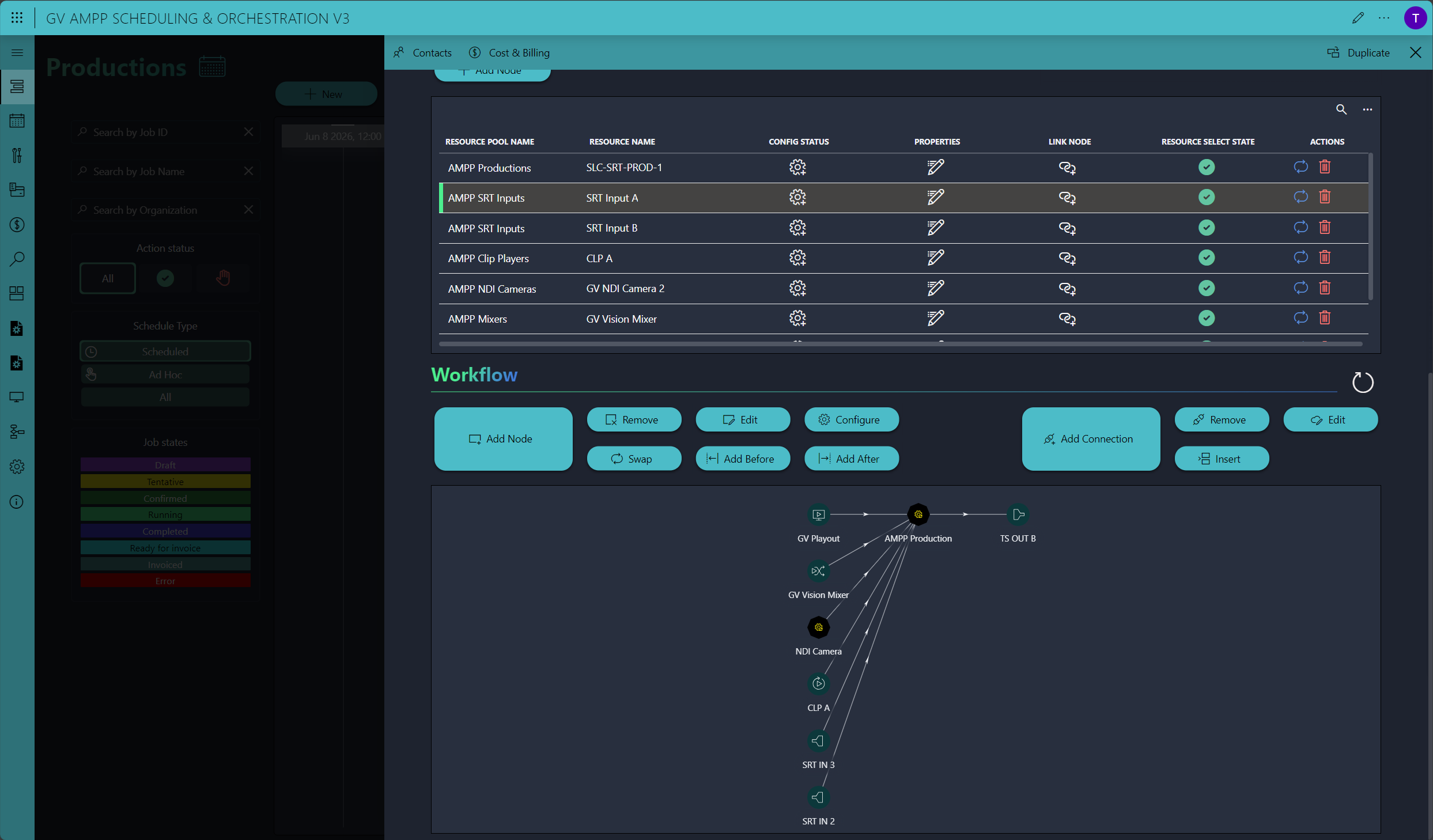 Each scheduled job is assigned a specific set of GV AMPP workloads.
The DataMiner solution is flexible and can also manage other resources outside the GV AMPP ecosystem, enabling full end-to-end orchestration across your production infrastructure.
 Resources overview: overlapping workloads
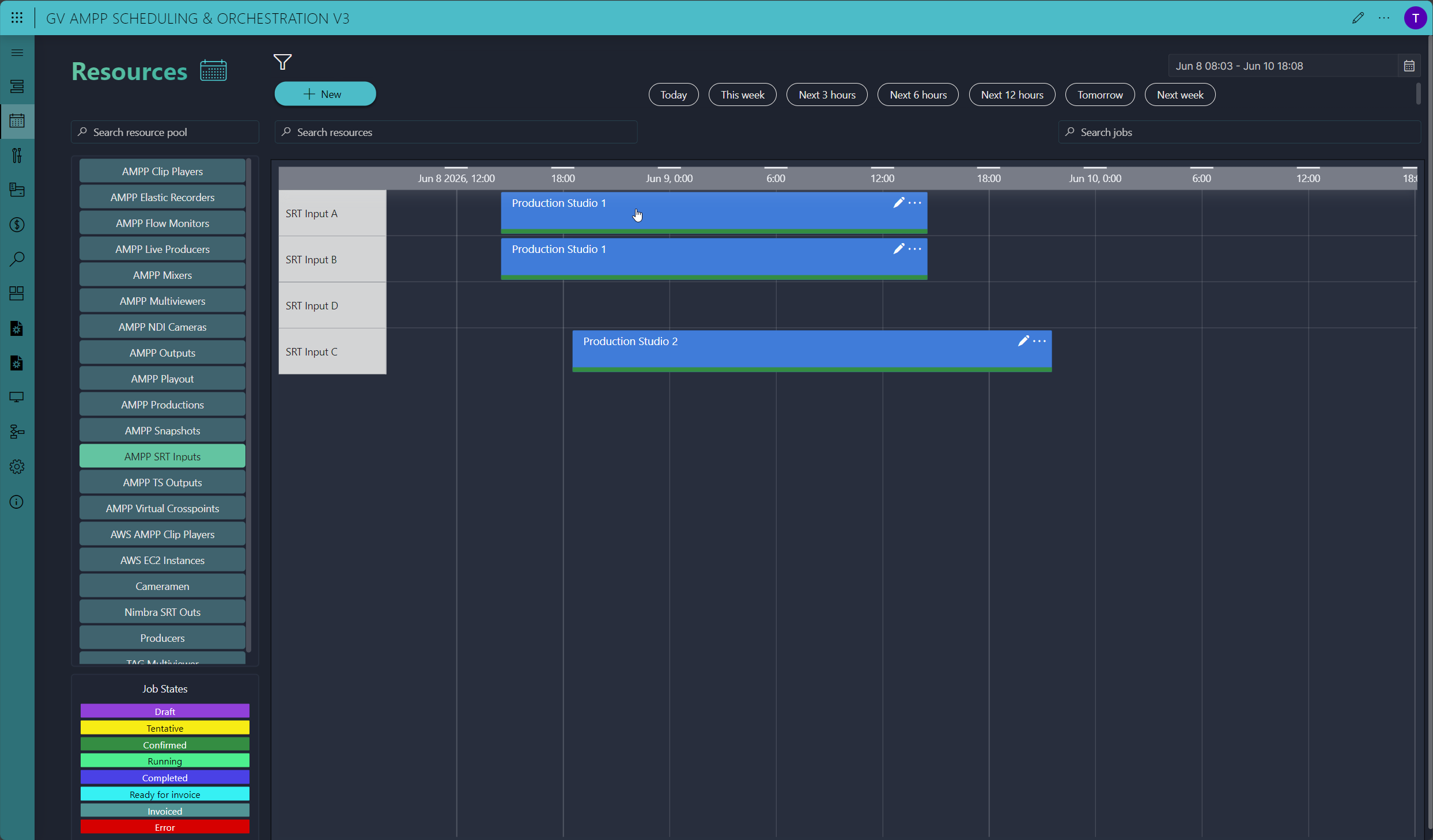
On the Resources page, you can see that three SRT input workloads are scheduled with overlapping time periods.
This page helps operators and automation systems visualize and track resource usage, identify potential conflicts, and optimize scheduling for maximum efficiency.
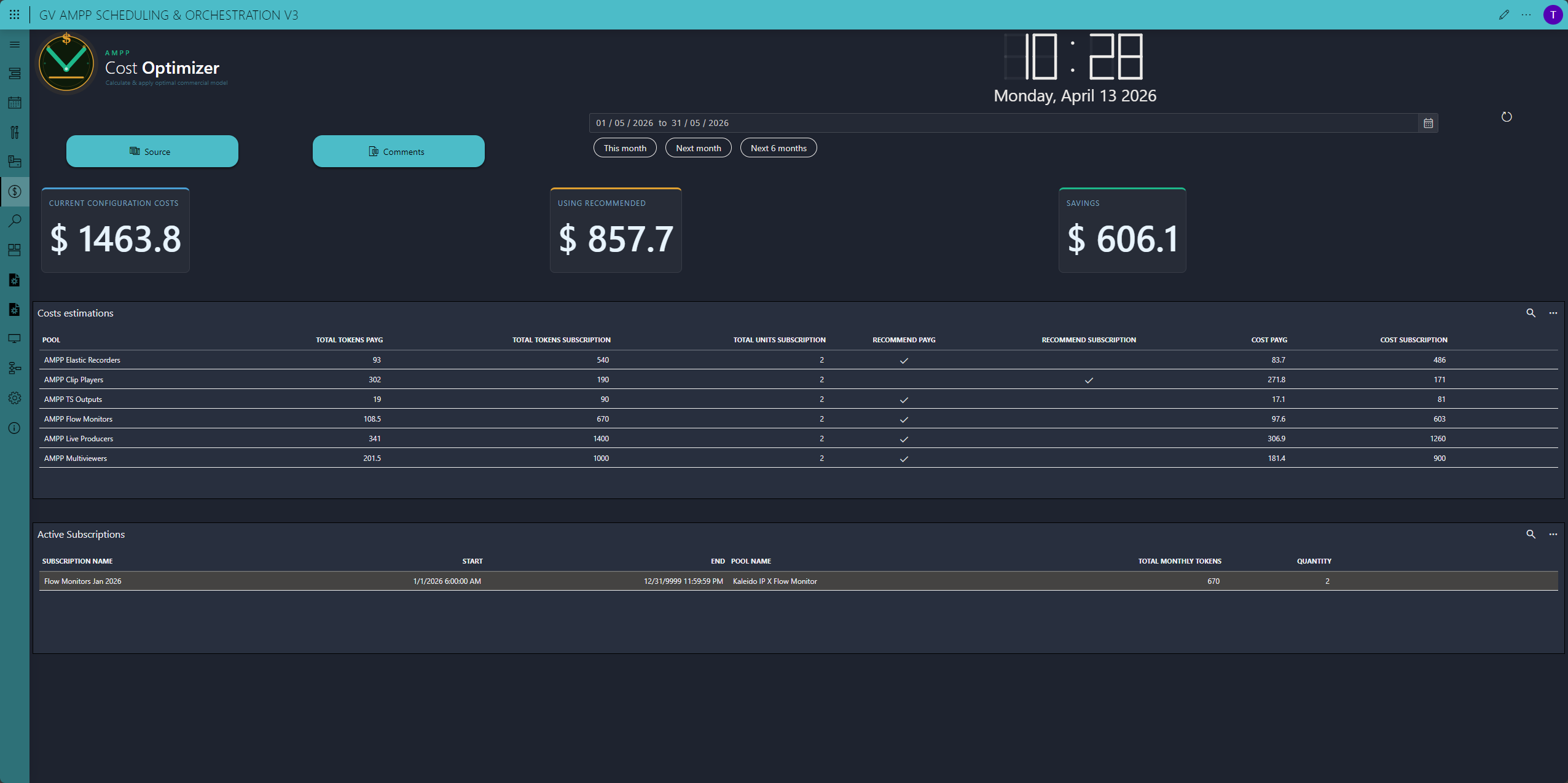
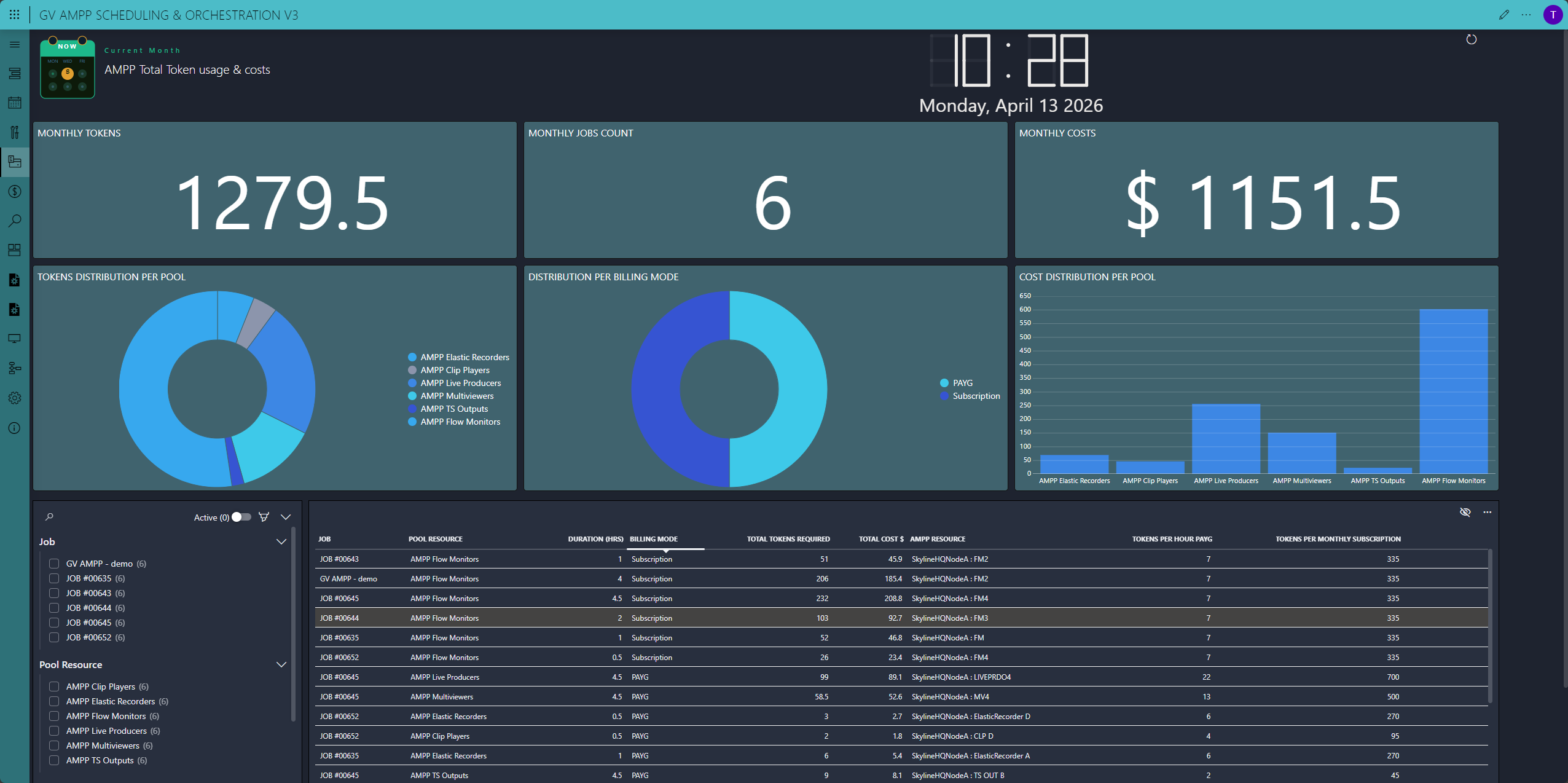 Cost optimization overview
DataMiner continuously tracks actual token usage per month for all workloads.
It stores the PAYG and subscription costs for each workload type, knows how many hours each workload runs, and records which commercial model is applied.
For workloads running under a subscription, DataMiner allocates the monthly subscription cost across all productions using that workload, providing a precise view of production-level costs and enabling informed optimization decisions.
Dynamic FinOps in actionWith all production and resource data in place, DataMiner calculates the tipping point for every month in the future where a subscription becomes more cost-efficient than PAYG.
It considers not only the total hours per workload type, but also overlapping workloads, ensuring optimal licensing decisions.
As a result:
• Some workloads remain in PAYG
• Others are switched to one or more subscriptions to minimize costs
With a single click, or fully automated, DataMiner interfaces with GV AMPP via its API to create, update, or delete subscriptions based on these calculations, delivering thousands of dollars in monthly savings.
Grass Valley is just one example of how applying FinOps principles, combined with advanced scheduling and orchestration, can make media operations significantly more cost-effective.