
solution Use Case
Detection of Outside Plant Issues

docsis
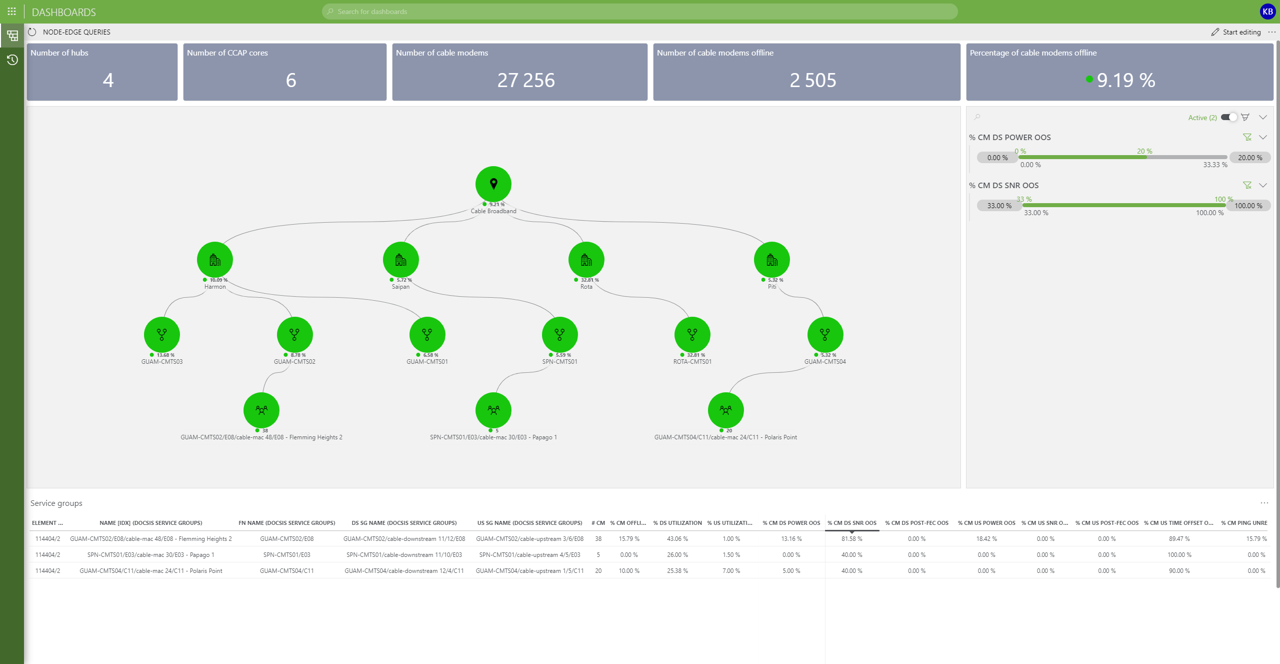
Using the DataMiner Generic Query Interface (GQI) and the Node Edge visualization in DataMiner Dashboards, a workflow can be set up to detect issues in the outside plant.
USE CASE DETAILS
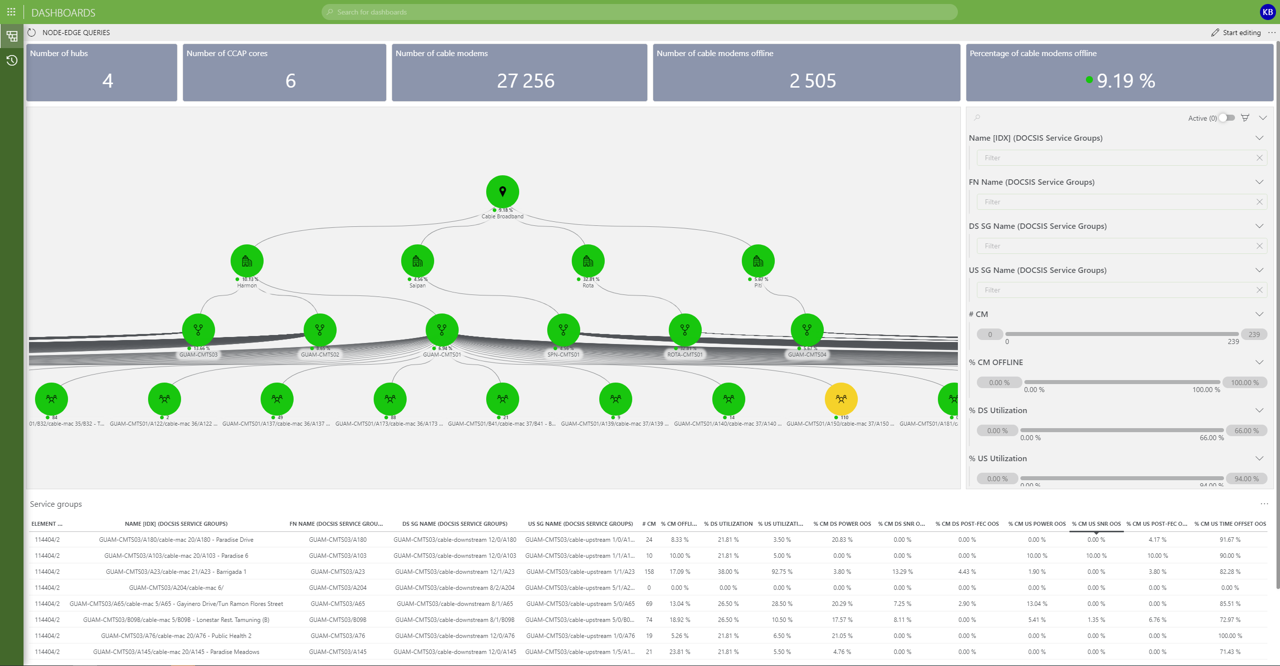 The sample "Cable Broadband" network we show here consists of 4 hub sites and 6 cable modem termination systems, supporting the service segments shown at the bottom. Under the nodes representing the market, hubs and cable modem termination systems, the percentage of modems that is offline is indicated. The number underneath each service segment node reflects the number of modems included in the segment.
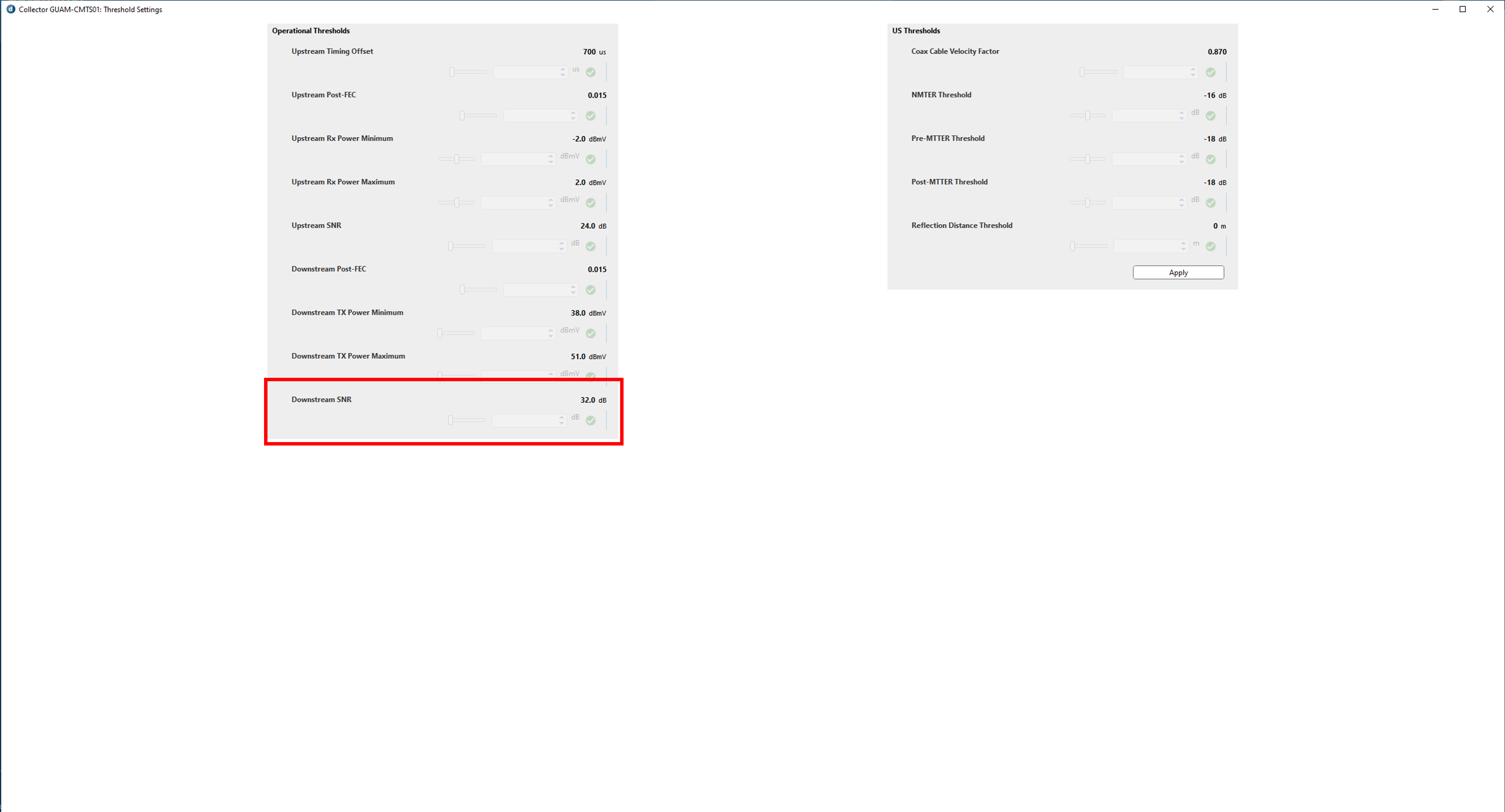 In the collector element, we define the threshold for the downstream signal-to-noise ratio (SNR) that will be used to report cable modems operating out of specification in this respect.
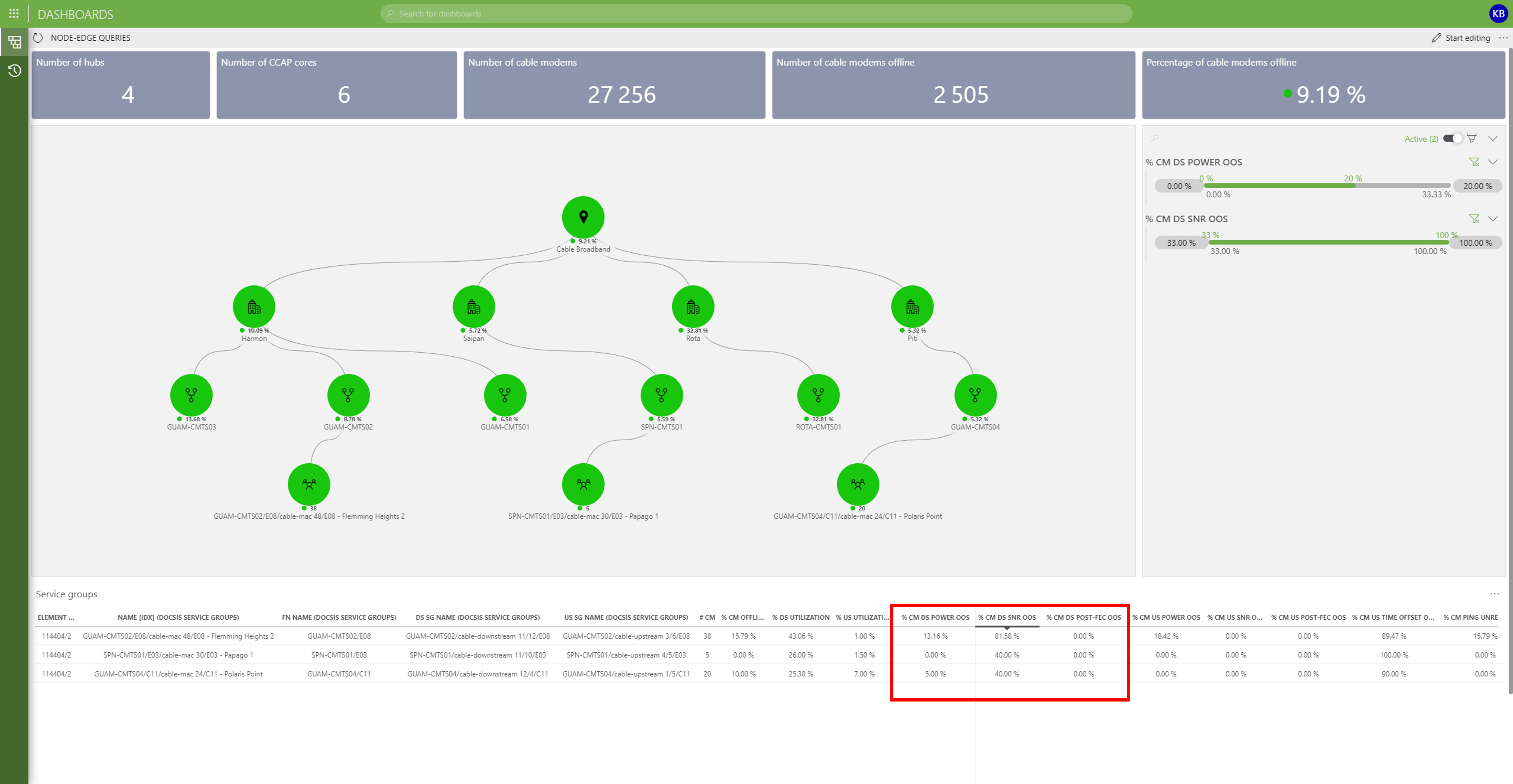 In the dashboard, we launched a query to see the network segments where more than 33% of the modems operate under the downstream SNR threshold of 32 dB we configured earlier and where less than 20% of the modems are out of specification on downstream Rx receive power (based on another threshold setting that was not shown).
The query returns three segments that report a modem population operating below this threshold, ranging from 40% up to 81% of the modems. However, just 13% of the modems in the first segment and even fewer in the others operate under reduced power. This clearly identifies segments that may be affected by a faulty RF element, a damaged cable or a loose connector, requiring a truck rollout to remedy the situation. Fortunately, the post-FEC error ratios for the different segments indicate that there are no errors yet.
Note that the cable modem quantities shown under the nodes and in the table confirm a total of 63 affected modems/subscribers, supporting easy prioritization of the activities for outside plant teams or contractors.
In the dashboard, we launched a query to see the network segments where more than 33% of the modems operate under the downstream SNR threshold of 32 dB we configured earlier and where less than 20% of the modems are out of specification on downstream Rx receive power (based on another threshold setting that was not shown).
The query returns three segments that report a modem population operating below this threshold, ranging from 40% up to 81% of the modems. However, just 13% of the modems in the first segment and even fewer in the others operate under reduced power. This clearly identifies segments that may be affected by a faulty RF element, a damaged cable or a loose connector, requiring a truck rollout to remedy the situation. Fortunately, the post-FEC error ratios for the different segments indicate that there are no errors yet.
Note that the cable modem quantities shown under the nodes and in the table confirm a total of 63 affected modems/subscribers, supporting easy prioritization of the activities for outside plant teams or contractors.
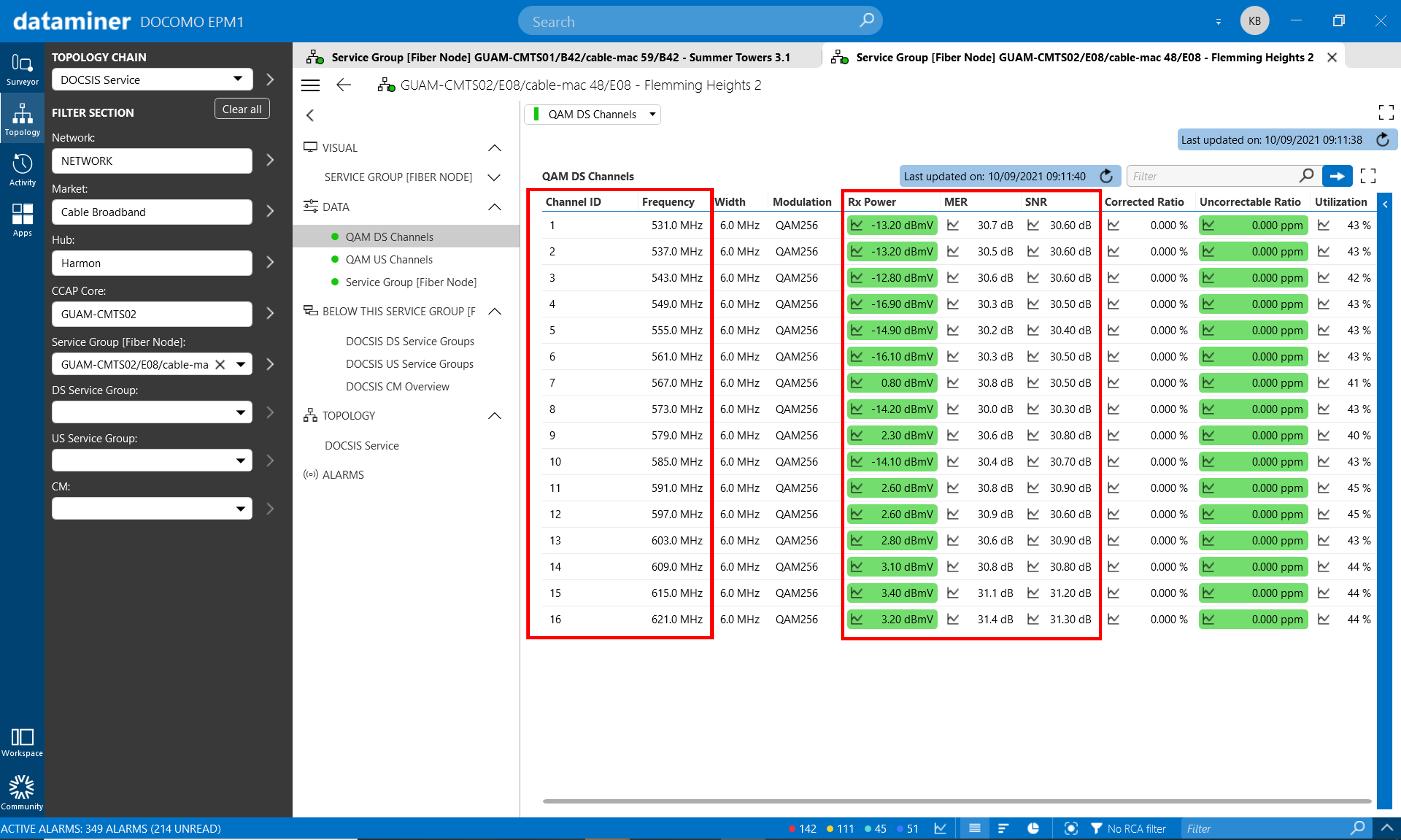 This is the downstream channel table for the segment where 81% of the modems were below the configured SNR threshold of 32 dB. It shows that this condition applies to all channels, so it is most likely that the segment suffers from a faulty RF circuit injecting broadband noise, broadband ingress (e.g. LTE) entering over damaged shielding, or a loose connection.